METHOD · CLASSICAL
The Vaganova Method Explained
What the method actually is, how it differs from RAD, Cecchetti, and Balanchine, and how to recognise it in a real studio.
Alexandra·7 min read·MAY 2026
Most ballet methods are invisible to the student who is doing them — the body learns a habit before the mind learns a name. The Vaganova method is the exception. Its fingerprints are the most legible in the classical canon, and the most consequential for how a dancer ends up moving. Three things are worth settling before you spend a year of your life inside it: who Agrippina Vaganova was and what she built, what the method actually is in technical terms, and what it means when a studio in Vienna claims to teach it.
Who Agrippina Vaganova was
Agrippina Vaganova was born in Saint Petersburg in 1879 and died in Leningrad in 1951. She entered the Imperial Ballet School in 1890 and graduated in 1897 — taught by Lev Ivanov, Christian Johansson, and the senior figures of the late Imperial Russian school. She danced at the Mariinsky from 1897 to 1916, earning the nickname "queen of variations" for her virtuosic solos, and was promoted to ballerina rank only in 1915, near the end of her stage career.
She began teaching at the Leningrad Choreographic School — the renamed Imperial Ballet School, and the institution that today bears her name — in 1921 and remained there until her death. She served as artistic director of the Mariinsky Ballet from 1931 to 1937. Her book, Fundamentals of the Classical Dance, appeared in Russian in 1934 and in English in 1946; the Dover edition is still in print.
She danced first, taught second, codified third. That sequence is why the method works on real bodies — and why the 1934 textbook reads less like a manifesto and more like the working notes of a teacher who had spent thirteen years in classrooms before sitting down to write.
What the method actually IS
Three concrete fingerprints any informed observer can spot.
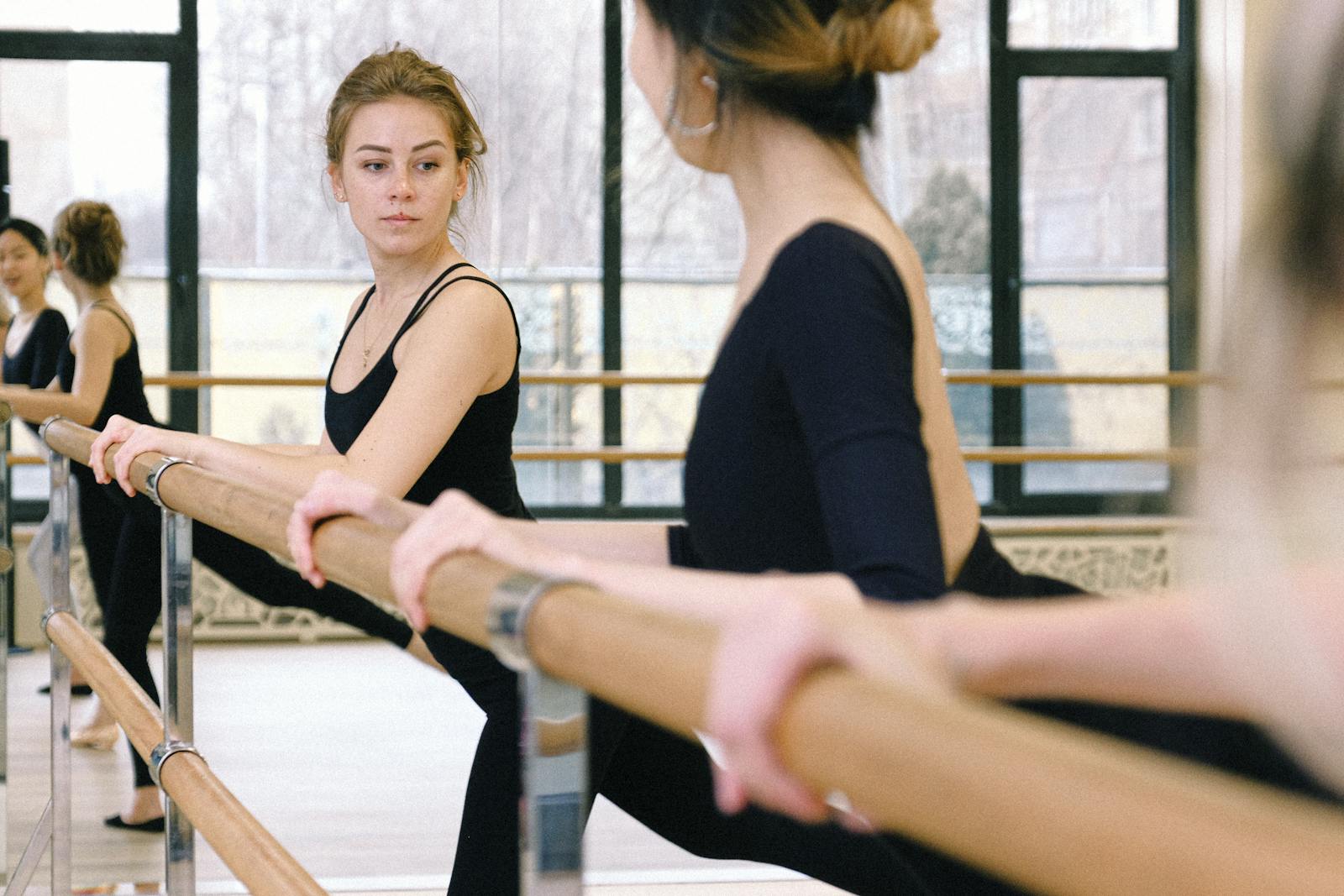
The first is that the arms work from lesson one. Six codified port-de-bras patterns are trained in year one — not waited for until the legs are competent. Coordination of arms, head, and back is taught alongside footwork, never bolted on afterwards.
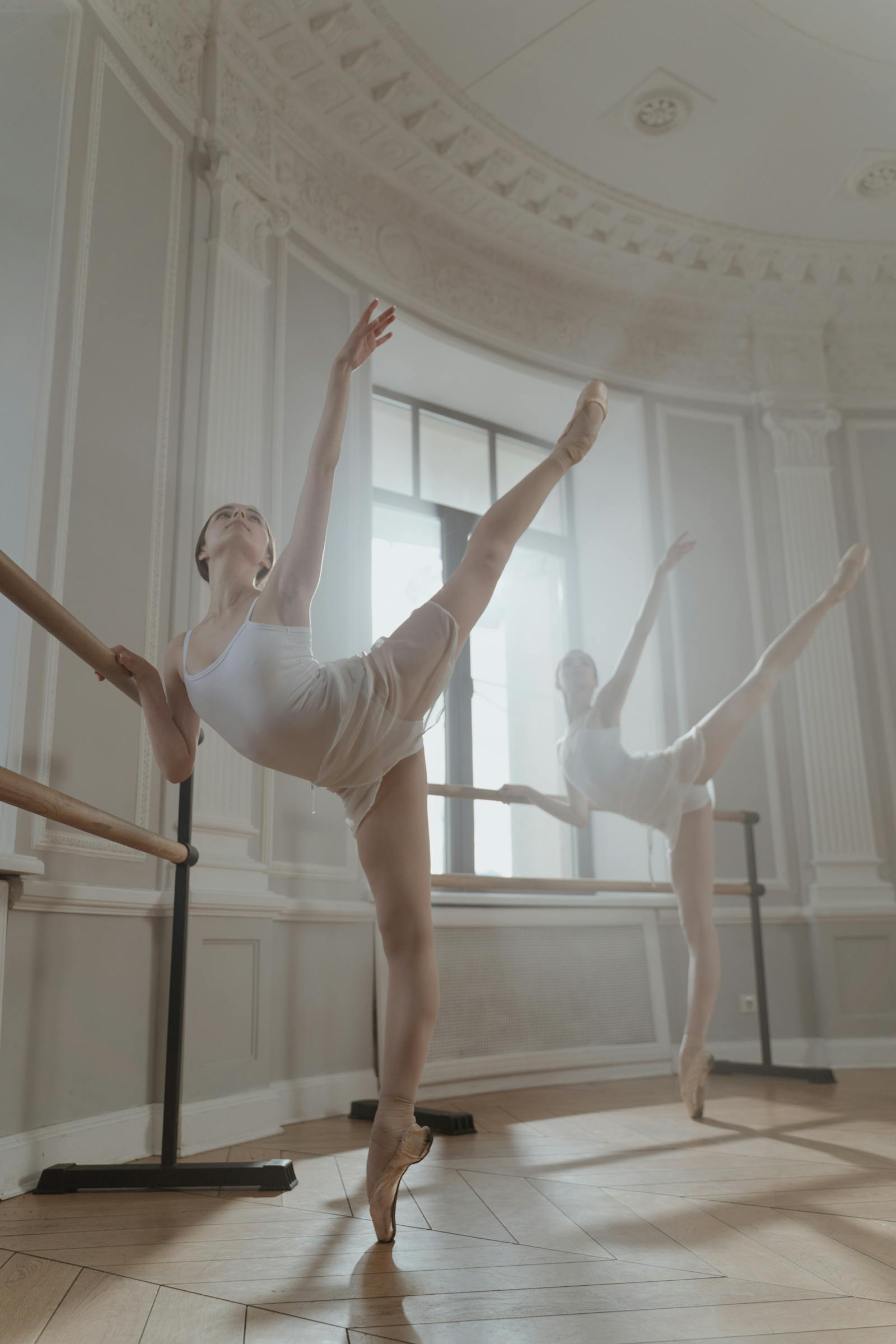
The second is that the back is the engine of the movement, not its destination. Épaulement — the carriage of the shoulders and head — is treated as structural to every step, not as decoration laid on at the end. Beginners are grounded in placement, turnout, and épaulement before more dazzling material is introduced.
The third is the geometry of the room. Every exercise is trained both en dehors and en dedans, and centre work is performed in croisé or effacé rather than facing the front. This is how Vaganova-trained dancers learn to read direction and stage space from the beginning.
The curriculum that delivers all of this is eight years long, six days a week, with a strict prerequisite-strength rule: no step is introduced until the student has the strength for it. The pedagogical signature Vaganova herself stated was precision in the dose — when to teach what, for how long, and in what quantity.
Vaganova vs the other classical methods
Four classical methods sit alongside Vaganova, and the cleanest way to tell them apart is by what each one prizes.
The Cecchetti method codifies the body's anatomy first — the student must understand the mechanism before producing the shape, and the goal is to internalise rather than to imitate. The Royal Academy of Dance prizes graded, measurable progression — a syllabus tested at each level, deliberately moderated in tempo and designed for wide international teaching. The Balanchine method prizes speed and extreme line — built around a twentieth-century repertoire that asked dancers to attack rather than settle, with faster movement, higher extension, and a slightly off-balance quality. The French school of the Paris Opera prizes refinement and lightness — one of the oldest continuous teaching traditions in Western ballet, transmitted master-to-student since the school's founding in the eighteenth century.
Vaganova prizes whole-body unity. Arms from day one, back as engine, croisé and effacé in the centre, dramatic expressiveness built into the technique rather than added at the end. Method choice is a pedagogical priority, not a quality ranking — and a studio that cannot articulate which method it teaches has not made the choice.
Why it works for adult beginners — and for children
The same features make Vaganova suited to both ends of the age range.
For adult beginners, the slow first level, the explicit dosing protocol, and the integration of arms and torso from lesson one mean that posture is corrected at the barre, before muscle memory writes over the chance. The prerequisite-strength rule protects an adult body that does not recover the way a ten-year-old's does, and the whole-body principle eliminates the "first the legs, the arms come later" trap that produces stiff carriage in adulthood. The slowness is not a teaching style. It is a structural feature of the curriculum.
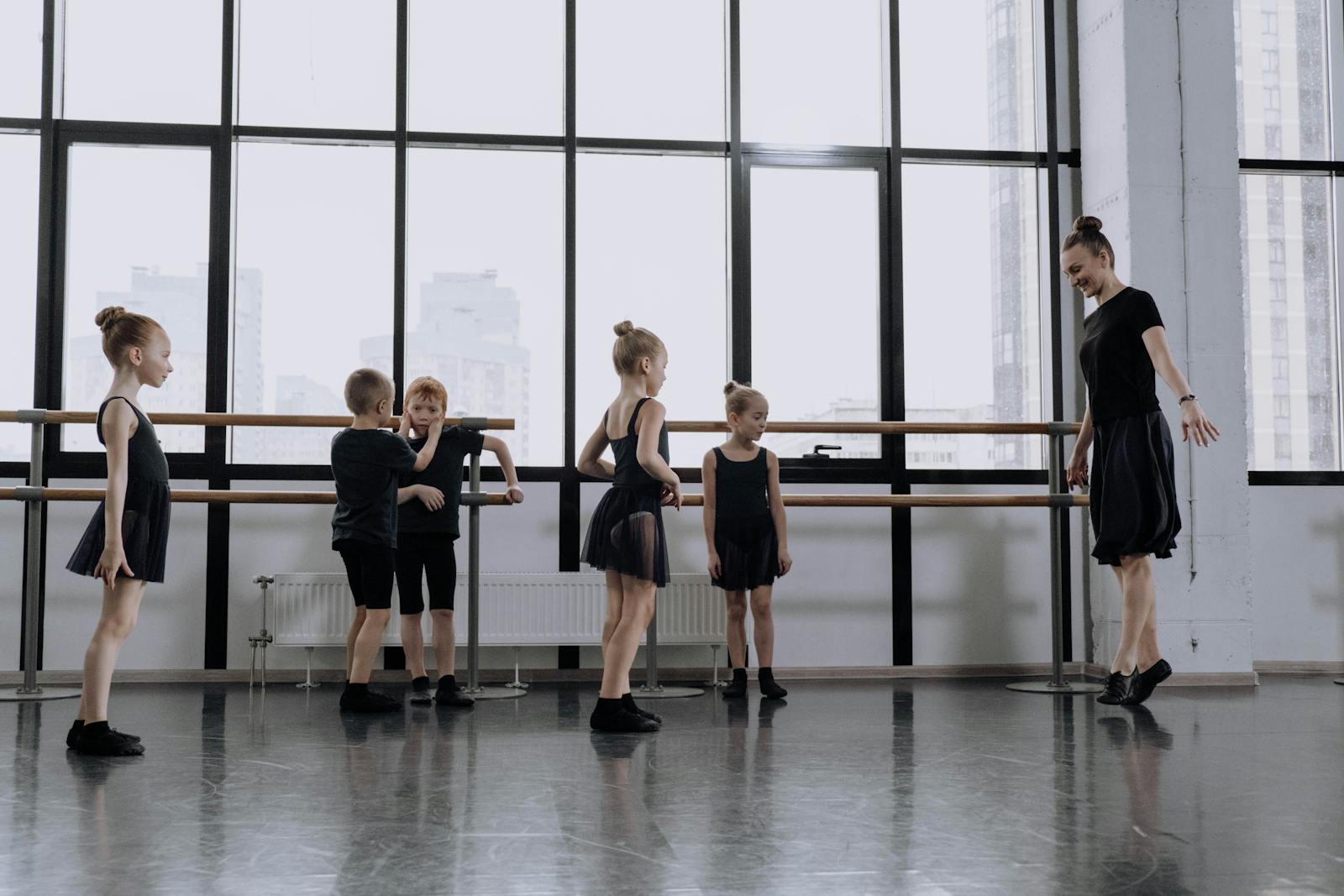
For children, the same gating prevents the body from being pushed past readiness. Russian schools deliberately begin meaningful classical work around age seven; earlier years are musicality and body awareness, not pseudo-technique. The eight graded levels mean a child progresses on observable benchmarks rather than on age. And because the method produces dancers comfortable with the Petipa and Ivanov repertoire — Swan Lake, Sleeping Beauty, Nutcracker — children grow up able to dance the works they wanted to dance in the first place.
The method is only as good as the teacher in front of the room
ARTIS Ballet Vienna teaches the Vaganova method — adults and children, small groups, classes taught in English and German.
How to tell whether a studio actually teaches Vaganova
Four questions answer it.
Does the teacher's biography name an institutional lineage — the Vaganova Ballet Academy in Saint Petersburg, the Bolshoi Ballet Academy in Moscow, the Mariinsky? Outside the Vaganova and Bolshoi academies there is no authoritative Vaganova teaching diploma. The phrase "Vaganova-certified", common on Western studio pages, is in practice a marketing label rather than a credential — no Western body issues a recognised certification. The absence of a named institution behind the word is worth noticing.
Are the arms trained from the first lesson, or added later? Are exercises drilled both en dehors and en dedans, and is centre work done in croisé and effacé rather than en face? Can the teacher articulate, in plain language, why a particular step is being introduced this week and not last week?
In Vienna the method silence of most studios is itself informative. Attitude Ballet Studios names the Vaganova method openly on its pages. The Wiener Staatsoper Ballett-Akademie describes its training as classical and contemporary dance without naming a single method, while its faculty includes Vaganova-trained dancers from the Wiener Staatsballett. The remaining mainstream studios decline to declare. The question is fair to ask, and an honest studio will give a direct answer.