GUIDE · CHILDREN
What Children Wear to Ballet Class
Nothing for the trial class beyond what is already in the wardrobe; a small, exact set once your child continues. What each piece is for, and where in Vienna to get it.
Alexandra·5 min read·SEPTEMBER 2026
Parents ask about clothes before they ask about anything else, usually with a worried glance at a shop window full of tulle. The honest answer has two halves. For the trial class, a child needs nothing that is not already at home. Once they continue, the group wears a small, precise set of things, each with a reason behind it, and the studio tells you exactly what your child's group wears and where to buy it in Vienna, so nothing is bought blind.
For the trial class
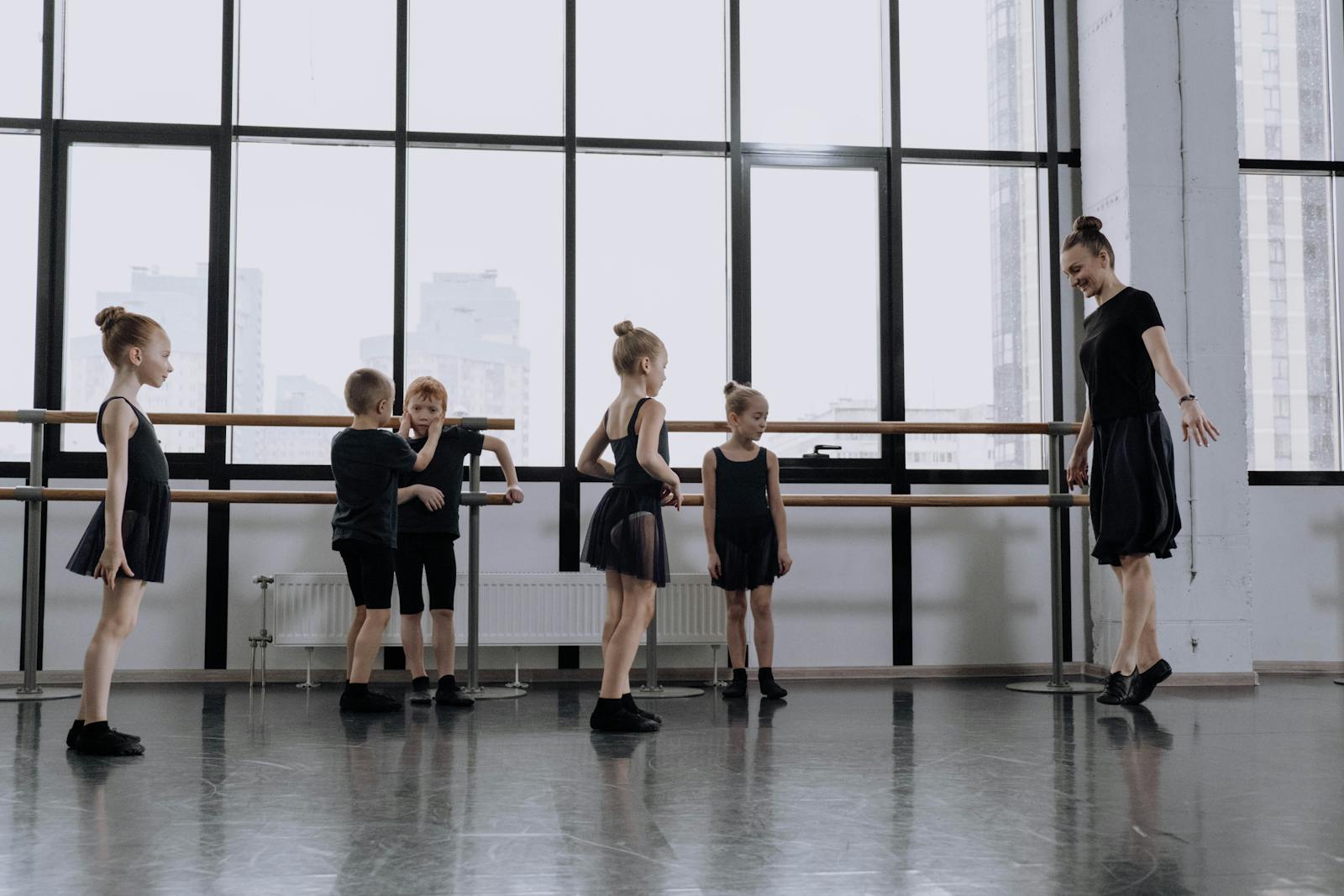
Leggings or close-fitting tracksuit bottoms, a T-shirt that does not hang to the knees, and socks. That is the whole list. A first class is about whether your child enjoys the room, the music and the teacher; it is not the moment for a new outfit, and a child who feels dressed up tends to watch their clothes instead of the teacher.
Fitted matters more than pretty. The teacher reads a child's posture from the shape of the back and the placement of the feet, and a loose hoodie or wide trousers hide exactly that. If the socks have a rubber grip on the sole, better still; a polished floor is slippery in cotton.
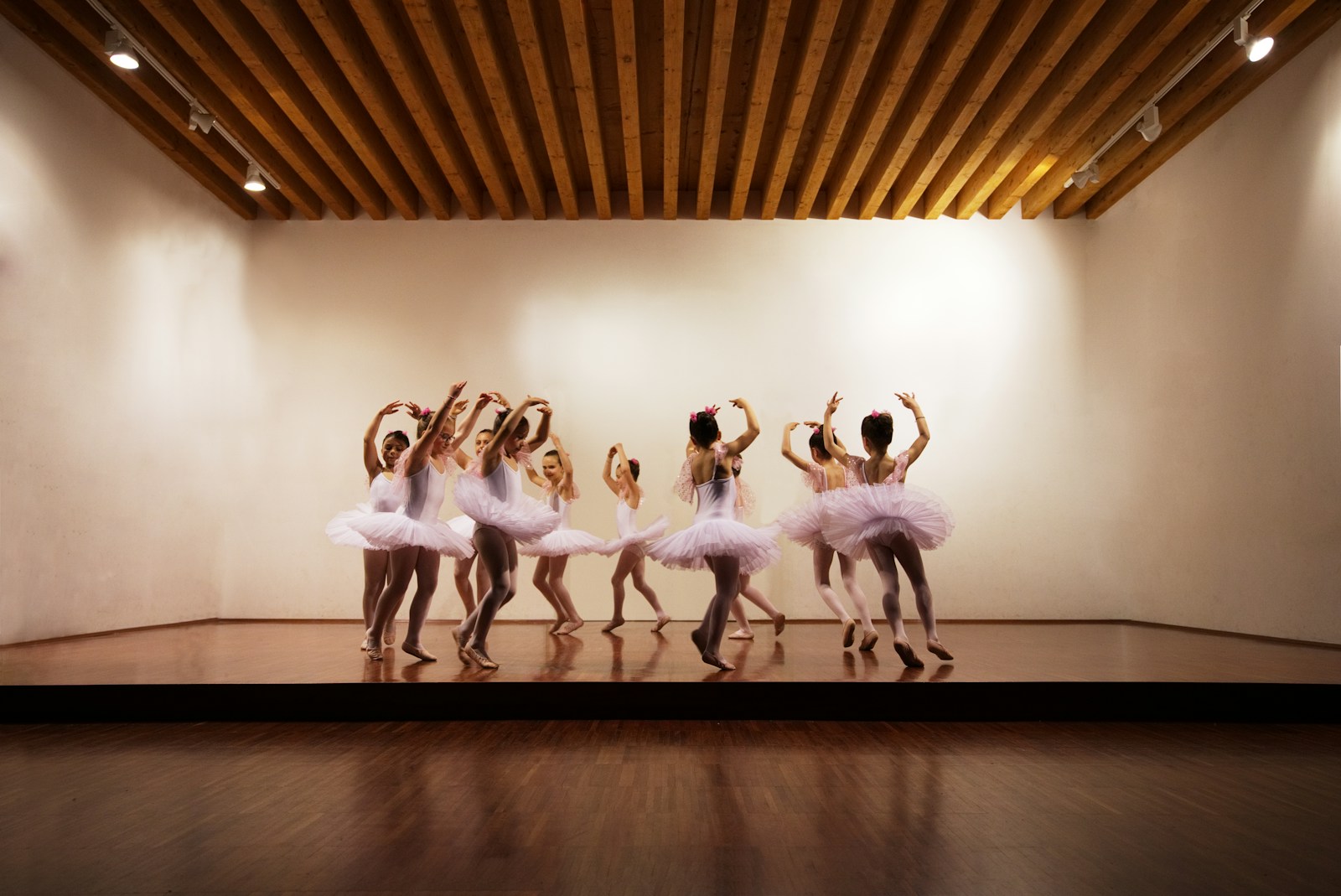
Leave the tutu at home even if it was a birthday present. In class it gets in the way of the arms and of the mirror, and it makes the other children look at it rather than at what they are doing. It will have its day on a stage.
What the group wears once your child continues
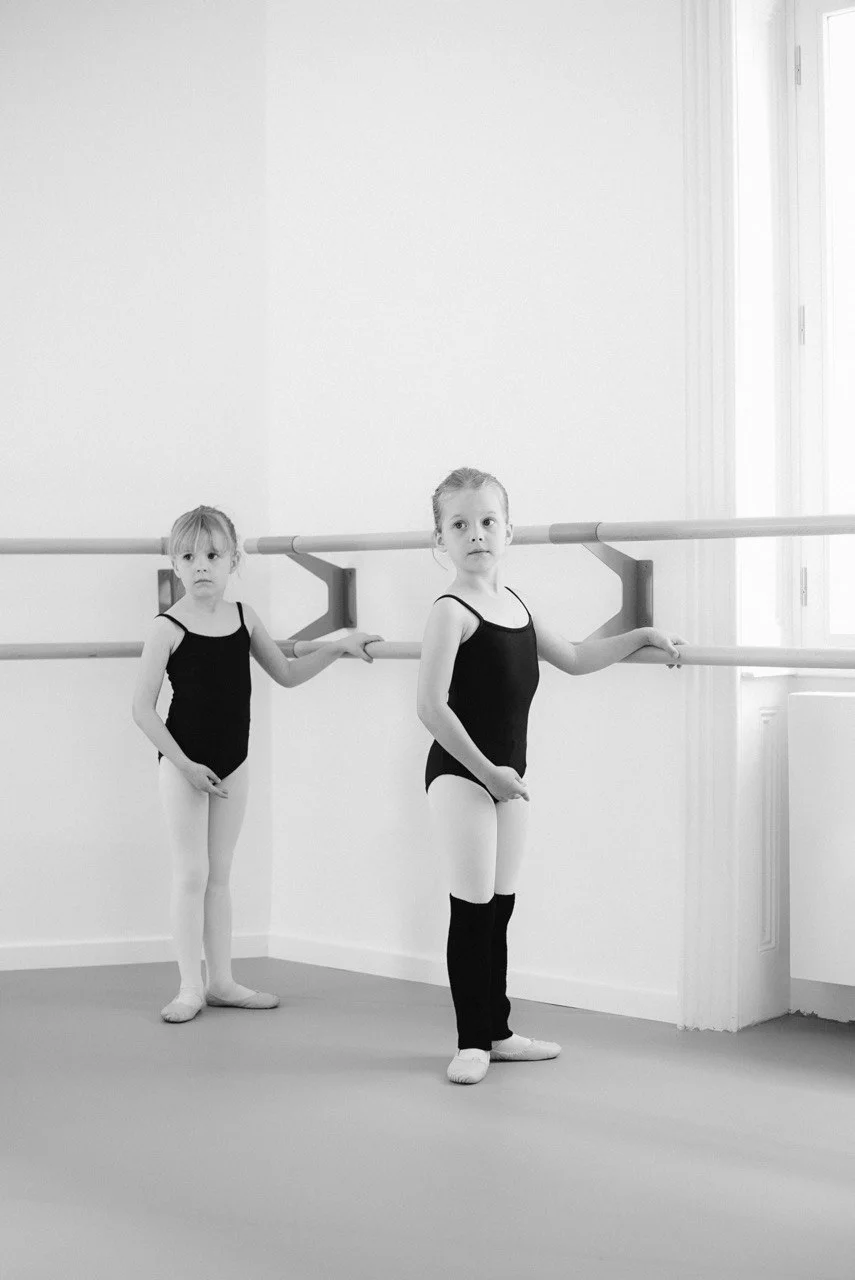
A leotard, tights and soft ballet shoes, with the hair pinned off the face: the set you see in every serious children's class, and in the photo above from our own studio, where the groups train in black leotards and pink tights. It looks like tradition and it is, but each piece is there for a practical reason.
The leotard shows the line of the back and the hips, so a correction can be given before a habit sets. Tights do the same for the legs and keep the muscles warm between exercises. The uniform colour is a kindness as much as a rule: when everyone wears the same, nobody compares outfits, and a class of five-year-olds settles noticeably faster. Leg warmers are welcome for the first minutes while the body warms up and come off once the barre begins; skirts and tutus stay in the bag.
Which colour your child's group wears, and whether anything differs for the youngest, is something we tell you after the trial, together with where to buy it. Boys in classical schools usually wear a fitted white T-shirt with black shorts or leggings and white or black shoes; again, the exact set is confirmed with you before you buy anything.
Ballet shoes, and where to find them in Vienna
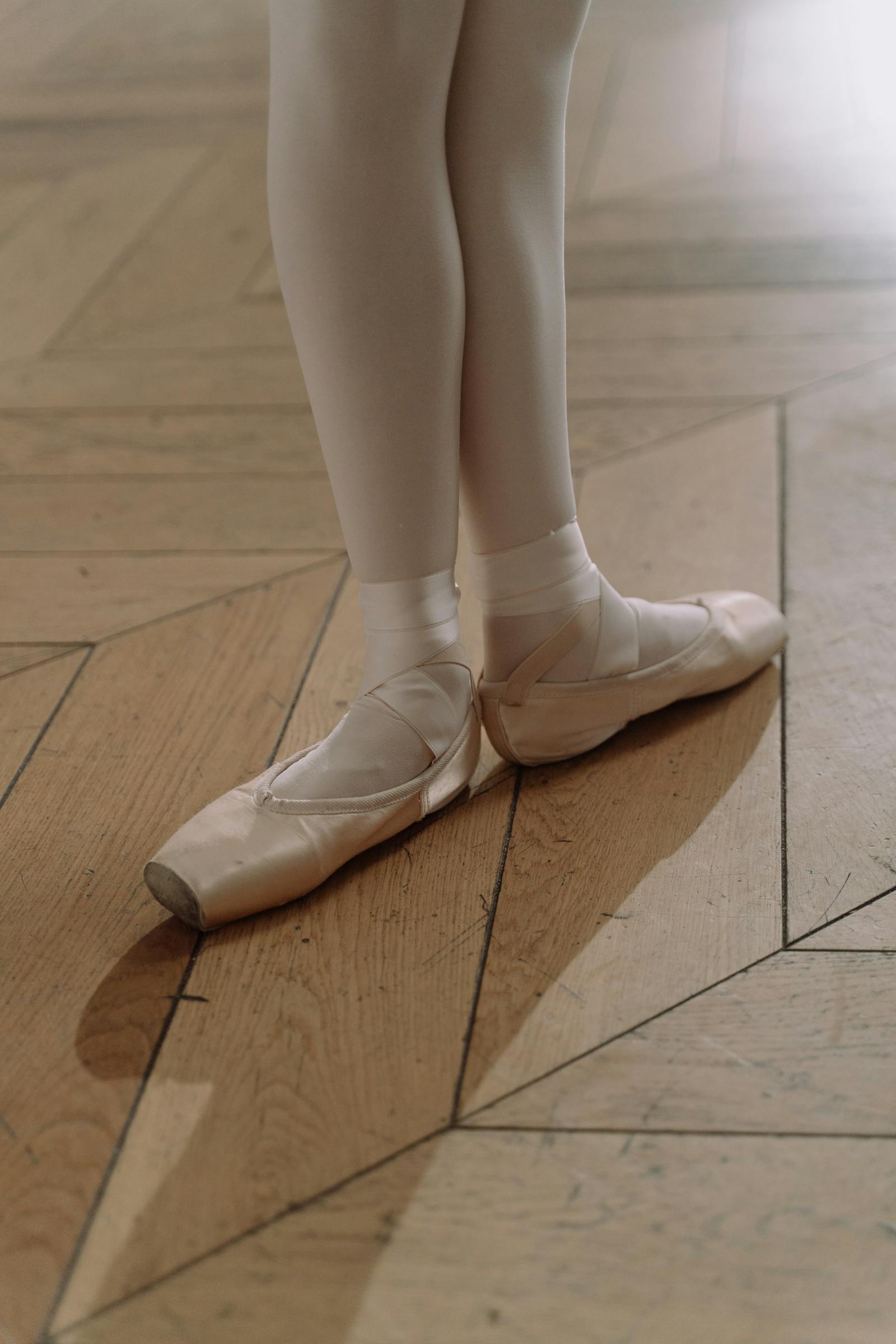
Soft ballet shoes, in leather or canvas, with an elastic across the instep. They should fit like a glove: the toes lie flat and reach the end without curling, and there is no spare length at the heel. This is the one item not to buy a size up. A shoe with room to grow into slips at the heel, and the child grips with the toes to keep it on, which is the opposite of what the foot should be learning.
In Vienna three shops fit children's dance shoes properly: Wilhelm Schachtner in the 18th district, House of Dancing in the 17th and Jump In on Neubaugasse in the 7th. A fitting takes ten minutes and is worth doing in person; sizes vary between brands, and children's feet change over a season. Write your child's name inside each shoe. Ballet shoes of the same size in the same colour look identical in a changing room.
Pointe shoes are not part of any of this. They come years later, after the feet and the technique are ready, and only on the teacher's say-so; there is a separate guide on that below. A shop that offers pointe shoes to a child of eight is selling, not fitting.
The first class costs nothing, and needs nothing new
Children's ballet at ARTIS in Vienna runs in small groups by age, from Pre-Ballet at three to Teen Ballet. The trial class is free and is arranged with the studio; the days and times of each group are on the children's page.
Hair, jewellery and the small things
Hair off the face and off the neck: a bun for long hair, a tight ponytail or clips for shorter hair. The reason is not the look. The head finishes the line of the spine, and a child who keeps pushing hair out of their eyes loses the exercise every time. A bun takes two minutes with a hair net and a few pins, and children learn to sit still for it surprisingly early.
No necklaces, bracelets, rings or dangling earrings; small studs are fine. Nothing that can catch, swing or clink against the barre. A small bottle of water by the wall, a cardigan for afterwards, and a bag that closes, so that one small ballet shoe does not end up under the piano.
Everything here fits in one small bag that lives by the door on class days. That, more than any single item, is what makes the routine easy for a child of five: the same things, in the same place, every time.