GUIDE · POSTURE
Ballet for Posture and Alignment Why It Works
An honest, evidence-based look at what ballet trains in the spine, where the research is strong, and where the practice has limits.
Alexandra·7 min read·MAY 2026
Adults who arrive at a first ballet class with a quiet wish to "stand straighter" are not naive — the wish is anatomically reasonable, and the research is on their side. Classical ballet trains a small set of postural skills that the modern desk-and-phone day actively erodes: stacked spinal curves, a neutral pelvis, scapular set, and head placement under load. What follows is a clinical-warm reading of the evidence — what good posture actually is, what ballet trains for it, what the controlled trials show, and where the practice has limits worth naming out loud.
What good posture actually is
A healthy spine carries four sagittal curves, not a vertical line. Cervical lordosis sits between roughly twenty and forty degrees, thoracic kyphosis between twenty and forty, lumbar lordosis between twenty and thirty-five, and the sacrum closes the chain. The curves distribute axial load and absorb shock. Flattening them is not the goal of postural training — balance between them is.
Underneath the curves sits the pelvis. The International Association for Dance Medicine and Science (IADMS) defines a neutral pelvis as the position in which the anterior superior iliac spines and the pubic symphysis share a single vertical plane. From neutral, the deep hip rotators, the abdominal wall, and the glutes recruit efficiently; from anterior or posterior tilt, the recruitment chain misfires. Above the pelvis, the column is meant to stack — ear over shoulder over hip over knee over ankle in the sagittal plane. Every deviation from that line increases the gravitational moment on the joints below it.
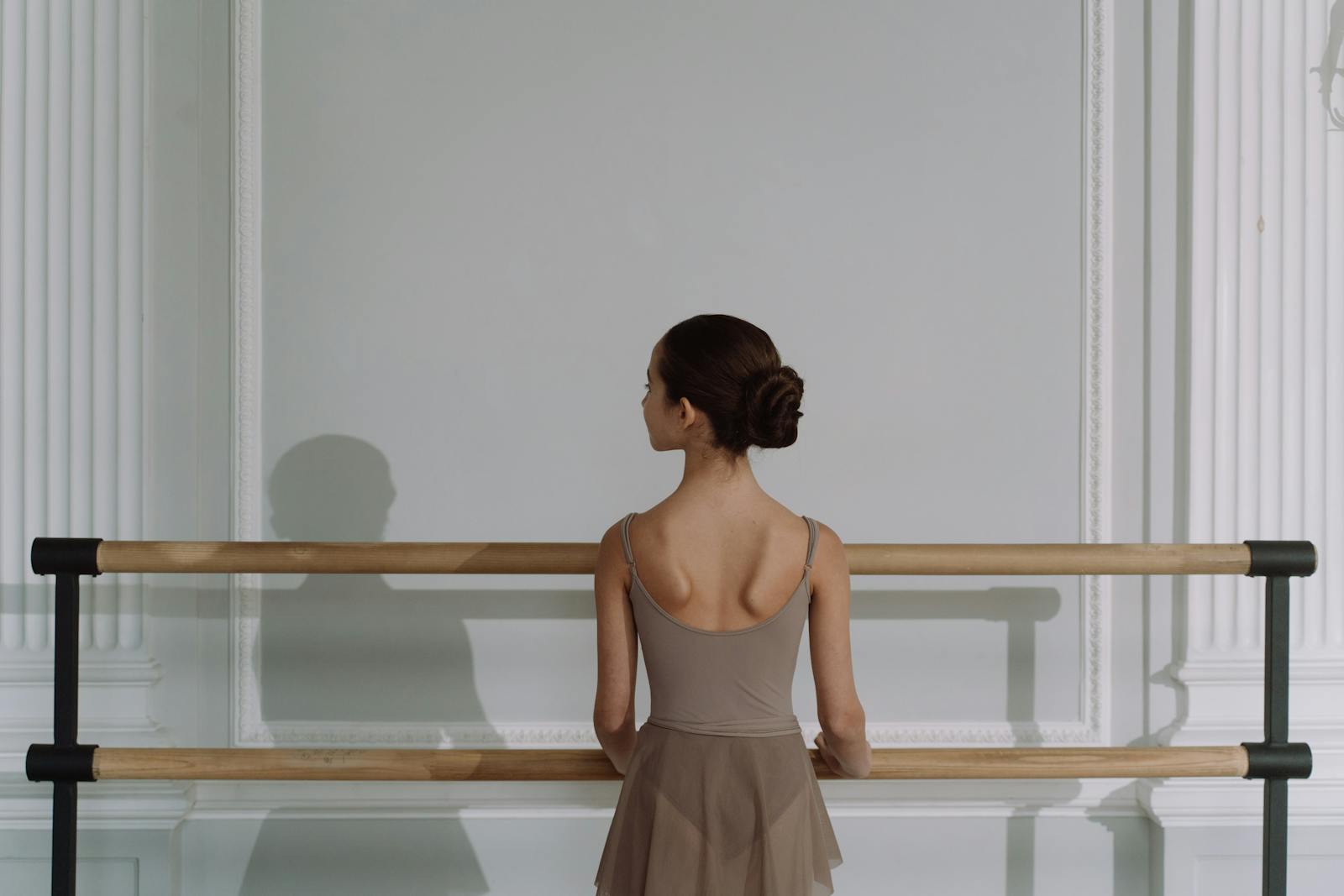
This is the architecture ballet works with. Not perfection, not stillness — a stacked column over a neutral base, maintained while moving.
What modern bodies actually do — and the names for it
The Czech neurologist Vladimir Janda described the two dominant adult postural patterns in 1979, and the labels have held up because the muscle pairs they name do too.
Upper-Crossed Syndrome (UCS) is the desk-and-phone shape: tight upper trapezius, levator scapulae, pectoralis major and minor, sternocleidomastoid, and suboccipitals; weak deep neck flexors, serratus anterior, rhomboids, and mid and lower trapezius. The visible result is forward head, rounded shoulders, and thoracic hyperkyphosis. A 2022 study (PMC 9760021) documented forward-head posture in 62.6 percent of surveyed students. The biomechanical cost is steep: a 2025 review (PMC 12104847) reports that each fifteen degrees of cervical flexion roughly doubles the load on the cervical spine, and angles past forty-five degrees accelerate disc degeneration.
Lower-Crossed Syndrome (LCS) is the partner pattern below the belt: tight hip flexors and lumbar erectors against weak abdominals and glutes. The result is anterior pelvic tilt and lumbar hyperlordosis — the "swayback" silhouette IADMS identifies as the most common deviation in dancers and sedentary adults alike. Office workers consistently display the LCS profile (PMC 12171772).
These are not character flaws. They are the predictable shape of a body that sits for eight hours and tilts its head forward for two more.
What ballet specifically trains
Vaganova class is engineered around the postural skills modern bodies lose first.
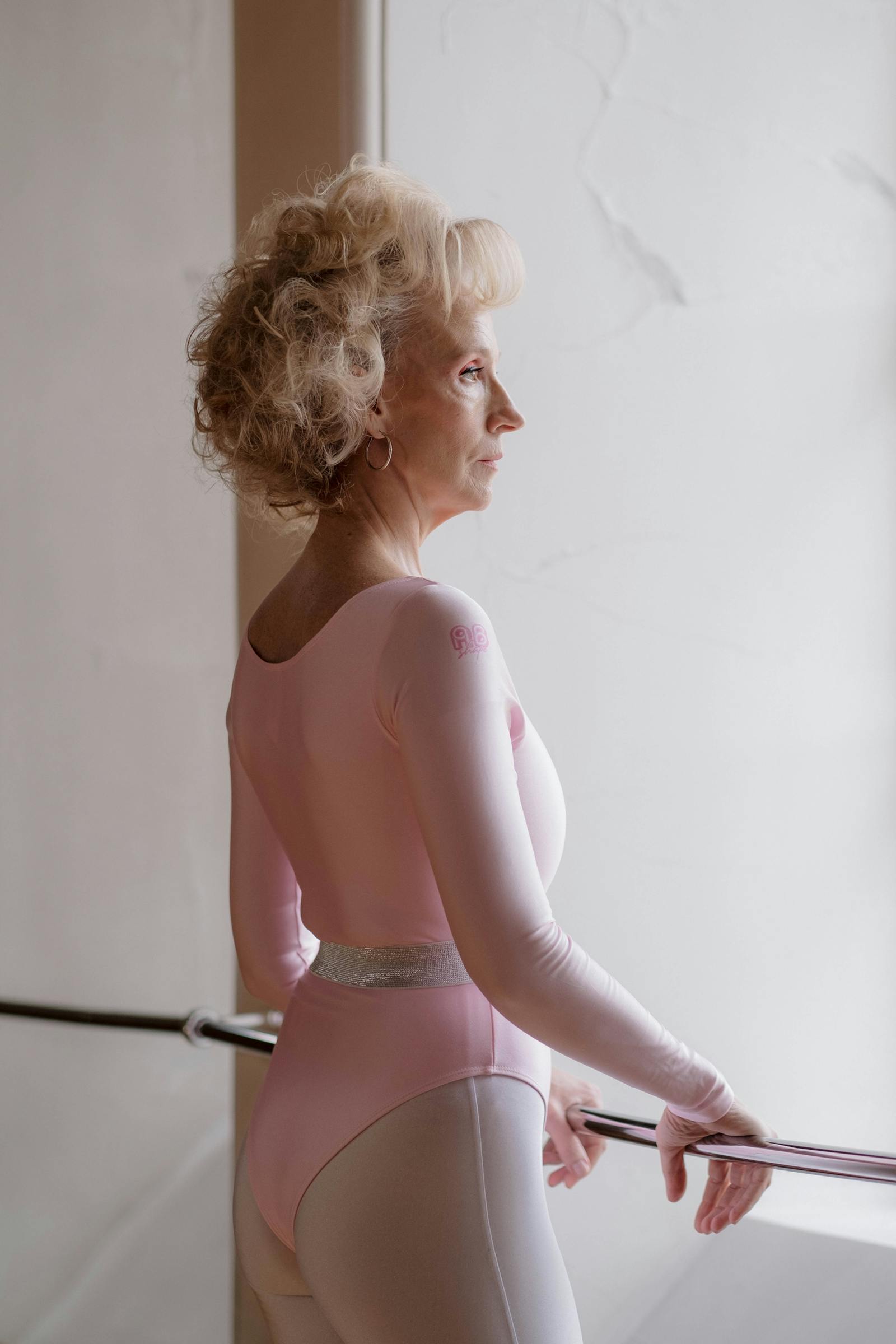
The pull-up through the crown is taught from the first lesson — chest lifted, shoulder blades engaged down and back, weight stacked over the standing leg. Agrippina Vaganova's Fundamentals of the Classical Dance (1934) names lower-back strength and arm plasticity as explicit pedagogical aims, which makes the method a direct counter-training for the UCS pattern: serratus and lower trapezius working, pectoralis lengthening, deep neck flexors holding the skull over the shoulders rather than in front of them.
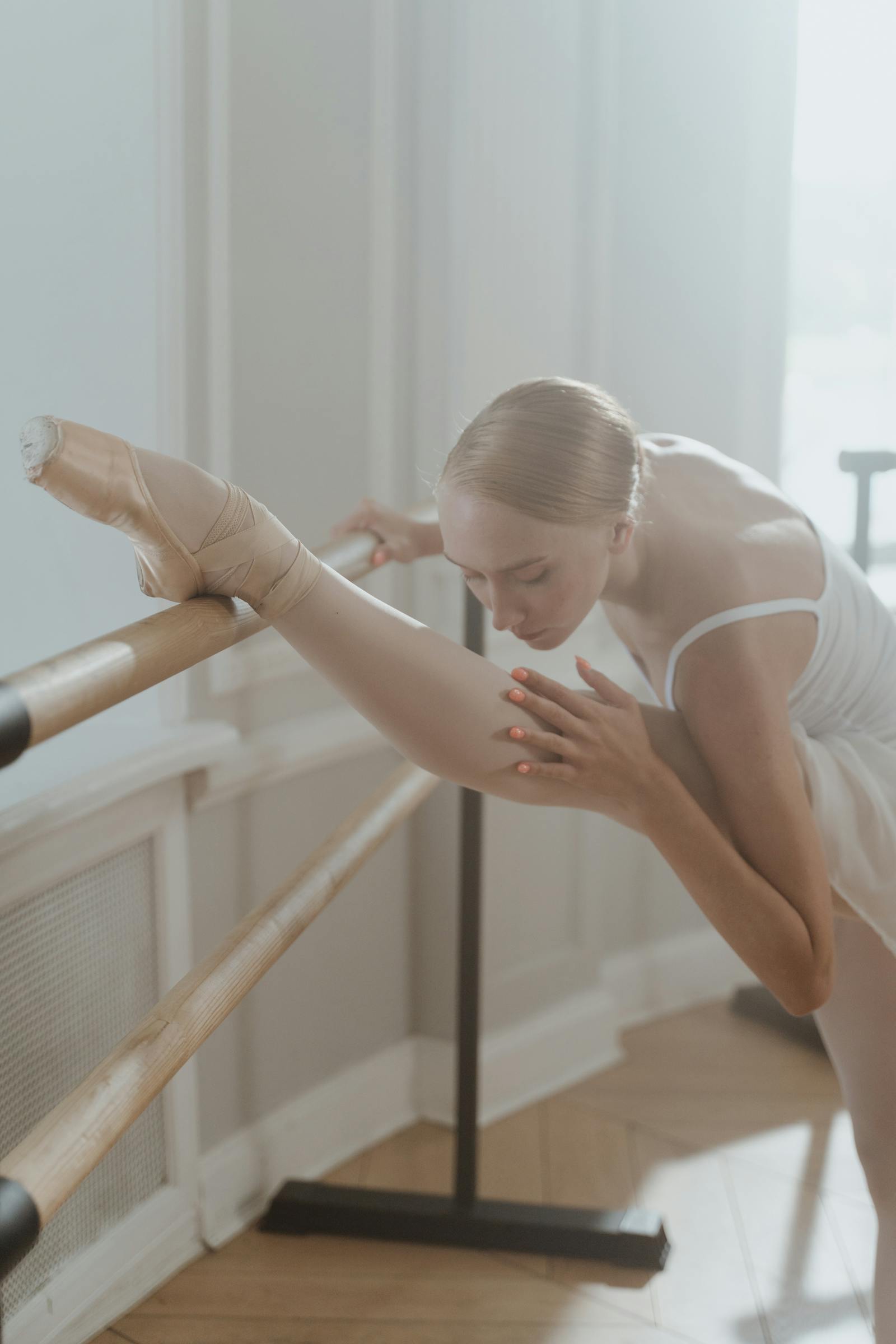
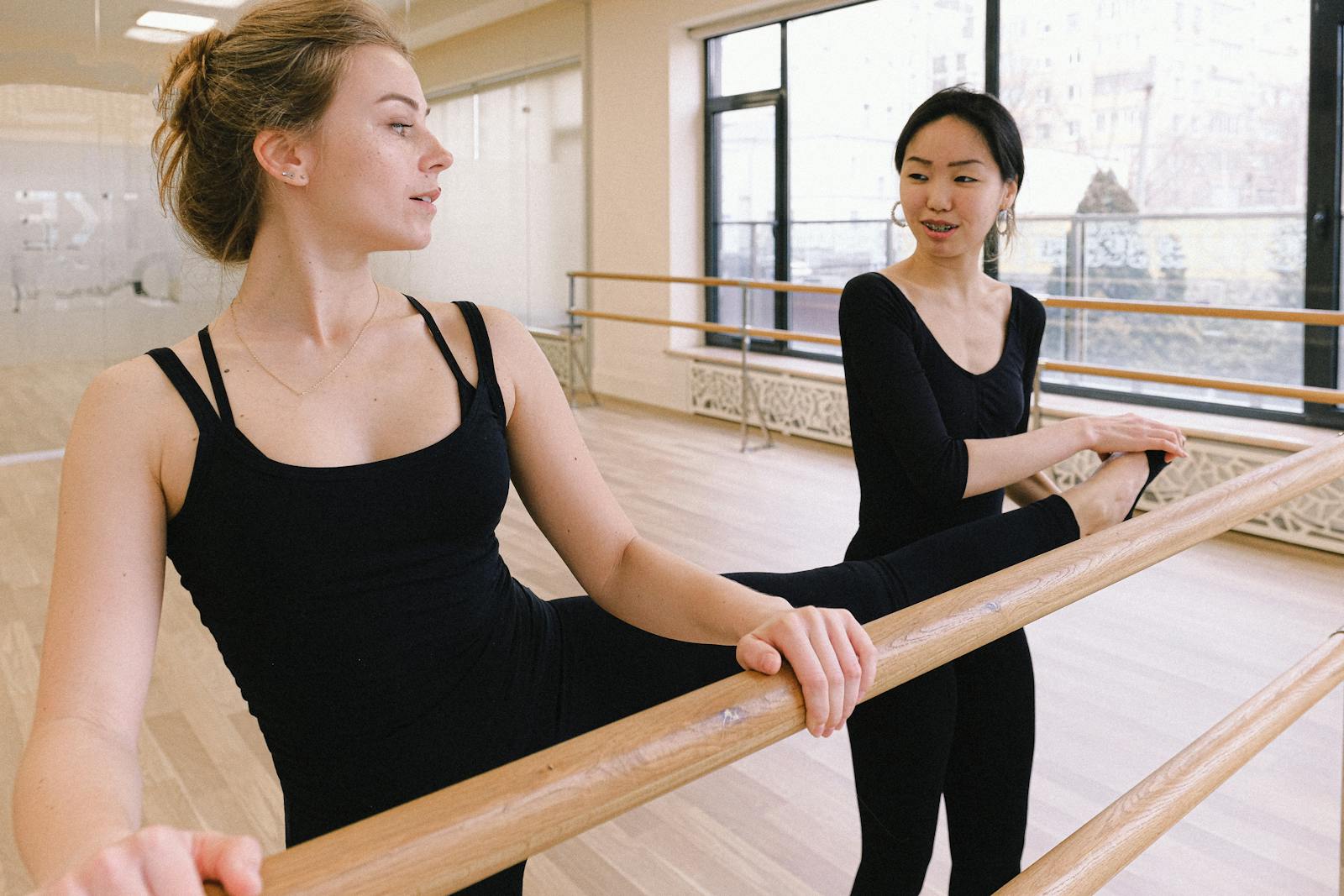
Épaulement — the coordinated placement of shoulders, head, and gaze — drills cervical and thoracic alignment under task load, not as a static hold. The barre constantly cues a neutral pelvis, because turnout from the deep hip rotators is only available when the pelvis is neutral; force turnout from a tilt and the rotators disengage. Pliés and demi-pointe enforce hip-over-knee-over-ankle stacking under dynamic load. The functional carryover is the point — alignment maintained while moving, not only while standing still.
This is what separates ballet from a static "stand tall" cue. The body is asked to keep the column stacked while turning, travelling, and breathing in time.
What the research shows
The controlled-trial literature on dance for postural metrics is modest but consistent.
A ten-week classical ballet intervention in older adults (PMC 7039482) produced significant reductions in postural sway against a control group. A twelve-week online ballet-and-modern programme in older women, twice weekly (PMC 11166139), improved postural stability, dynamic balance, and lower-limb strength. A separate twelve-week online dance study (PMC 11258640) recorded decreased mediolateral sway under eyes-closed and foam conditions, with faster gait. Trained professional dancers, compared with non-dancers, show smaller centre-of-pressure path length and smaller anteroposterior and mediolateral sway amplitudes eyes-open and eyes-closed (PLOS One, 2019).
On the postural metrics specifically — not balance — a cross-sectional study of dancers with four to nine years of ballet practice found reduced anterior pelvic tilt and reduced lumbar lordosis against matched controls. In Janda's language, sustained ballet training shifts the body away from the LCS pattern. The cleanest summary the literature supports: ballet is not the only intervention that does this, but it does it in motion rather than only in a held pose, which is closer to the functional demand of daily life.
Posture is built in the room, not in front of the mirror
Adult open ballet classes at ARTIS Vienna run six days a week. The first class is a single class, booked on its own in the app — the membership can wait until you know you want one, and that first class is then credited towards its first month.
Time to result, and what ballet does not fix
The honest answer to "how soon" depends on which postural metric is being changed.
Forward head responds quickly: a 2025 randomised trial (MDPI Brain Sciences) showed significant craniovertebral-angle improvement within four weeks at three sessions per week. Thoracic hyperkyphosis takes longer — three to six months of targeted training reduced kyphosis in the SHEAF trial (PMC 5873977), with effects retained at three-year follow-up. The ballet trials described above used ten to twelve weeks at two classes weekly. For an adult attending once or twice a week, visible lift through the chest and a quieter shoulder set commonly emerge between eight and twelve weeks — slower at one class, faster at two.
The caveats are equally honest. Ballet can aggravate an already-hyperlordotic lumbar spine when turnout is forced from the knees or pelvis rather than the hips. The documented risk factors for low-back pain in dancers — hyperlordosis, weak core, tight lumbar extensors, weak hamstrings — are the LCS pattern re-created by poor technique. The lifetime prevalence of low-back pain in dancers reaches up to 88 percent (JOSPT, 2019); the headline matters less than the mechanism. Ballet is not a treatment for structural scoliosis, Scheuermann's kyphosis, disc herniation, or radiculopathy — these belong to a physician, and acute disc pain is a contraindication to extension-heavy barre work until cleared.
What ballet offers is not a cure. It is sustained, musical, alignment-trained loading of the postural system — and on the metrics where the evidence is strongest, the body responds.