PRACTICAL · ADULTS 50+
Ballet Over 50 Where to Start
The practical companion to the mindset question — class format, weekly cadence, what to skip, and how to recognise a studio that actually teaches the fifty-plus body.
Alexandra·6 min read·MAY 2026
If the philosophical question — am I too old — has already been answered for you, the next one is more useful and harder to find in writing: where do I actually start. Adult ballet content tends to be written for the twenty-five-year-old returner with seven years of childhood training behind her. The fifty-plus beginner is a different student walking into a different problem. What follows is the practical map: what the fifty-plus body brings into the room, what ballet can give it back, how often to come, what to insist on in a class, and what to skip without apology.
What the body brings to fifty-plus ballet
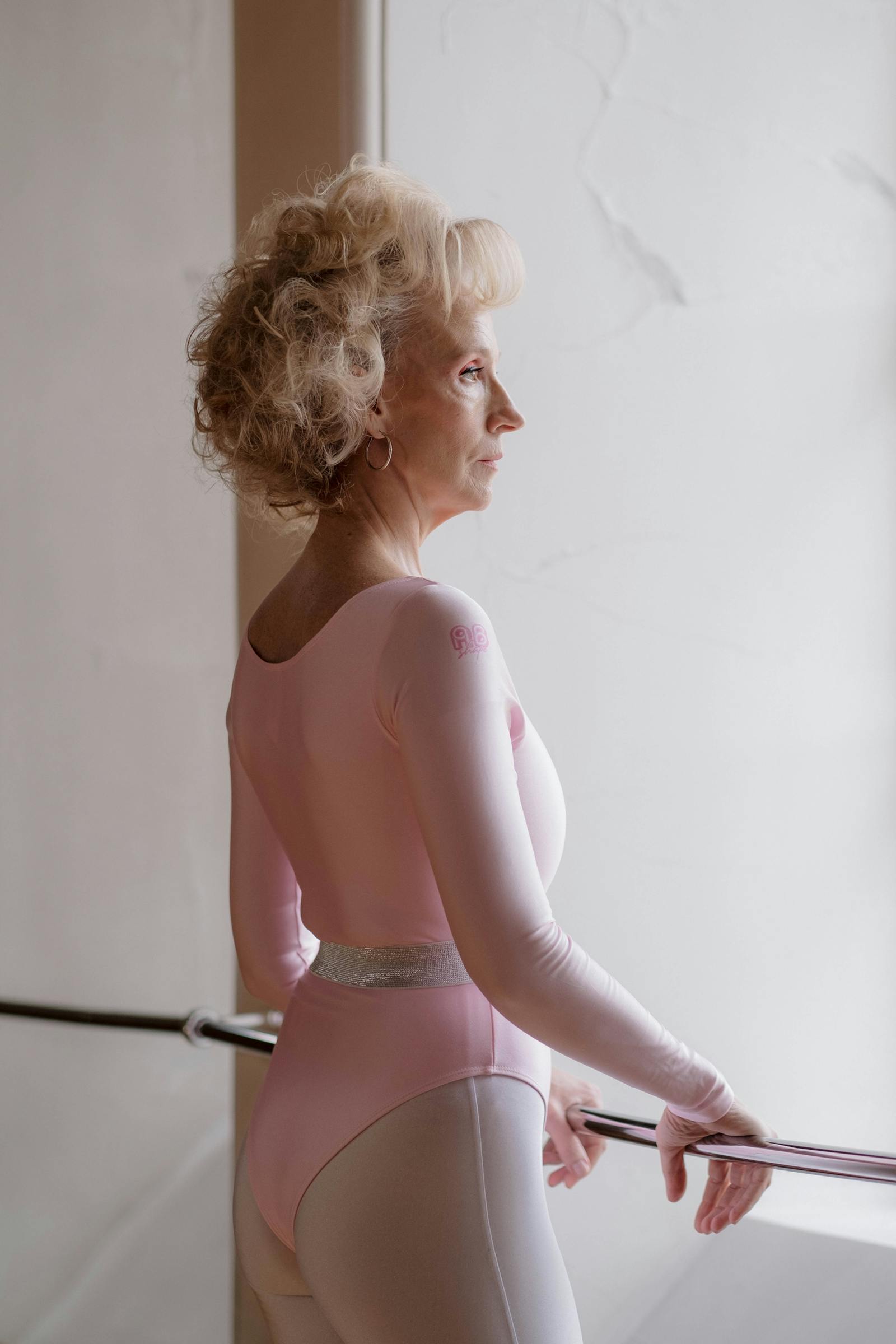
The fifty-plus beginner walks into a studio with assets a twenty-year-old does not have. Decades of patience. Executive control — the capacity to attend to a correction without flinching from it. A life history of movement that has already shaped postural habit. No growth-plate question: skeletal development has long since settled.
There are liabilities worth naming honestly. Muscle mass declines roughly three to five percent per decade after thirty, and the rate accelerates after forty. Collagen production tapers from the mid-twenties; tendons and ligaments lose elasticity, cartilage thins, synovial fluid decreases — flexibility narrows from the thirties onward. Recovery between sessions takes longer; motor consolidation in adults requires hours plus a night of sleep, where children consolidate within an hour.
A ten-week classical ballet programme in women aged fifty and above produced significant strength and balance gains with no adverse events; a separate Skidmore College trial averaged seventy-three point three years of age and was likewise safe and tolerated. The adult body trains within weeks, not "after years of preparation."
What ballet specifically gives back
Three things, measured and consistent across the literature.
First, balance. A network meta-analysis pooling twenty-seven studies and over a thousand older adults found that dance interventions significantly reduce fall risk. The specific effect size from a standing-slip perturbation test: forty-five percent of ballet-trained dancers fell, against eighty-two point six percent of non-dancers. Single-leg balance is trained every minute of every ballet class.
Second, postural rebuild. The fifty-plus spine carries decades of office posture, phone posture, driving posture. Ballet's first six months at the barre are essentially an alignment project — pelvis, ribcage, shoulders, head — taught more slowly and specifically than any group fitness format manages. The change is visible in walking, not only in the studio.
Third, joint range, recruited and protected within what is available. The Vaganova approach introduces a step only when the prerequisite strength exists; turnout is built within the hip's existing external rotation rather than forced past it. The dominant cause of dance injury is forcing turnout beyond available hip range — which is why this matters specifically after fifty.
One honest caveat. Ballet is weight-bearing and broadly protective for bone, but the specific "ballet builds bone in postmenopausal women" claim is not strongly supported. The most cited study of retired elite female dancers (mean age fifty-one) found bone mineral density comparable to controls at weight-bearing sites, not superior. Treat ballet as a balance, posture, and joint-range practice; anyone selling it as osteoporosis treatment is overclaiming.
Where to actually start — class format
One class per week is the sustainable floor for the fifty-plus beginner. The body needs the recovery window between sessions. Two classes a week is where visible technical progress begins — by month three, the difference between one-a-week and two-a-week students is plain.
The kind of class matters more than the schedule. Three formats to recognise.
A true beginner class — taught from the absolute beginning every term, with no assumed vocabulary — is the right entry point. Placement is taught before steps are loaded.
An open adult class advertised as "all levels" usually means returners with childhood training plus a few real beginners; the pace is set for the median student, and the median student in an open class is not you.
A dedicated senior or fifty-plus class, where it exists, is the gentlest entry — but in Vienna these are scarce. The practical alternative is a small-group true beginner course with a teacher experienced in older bodies.
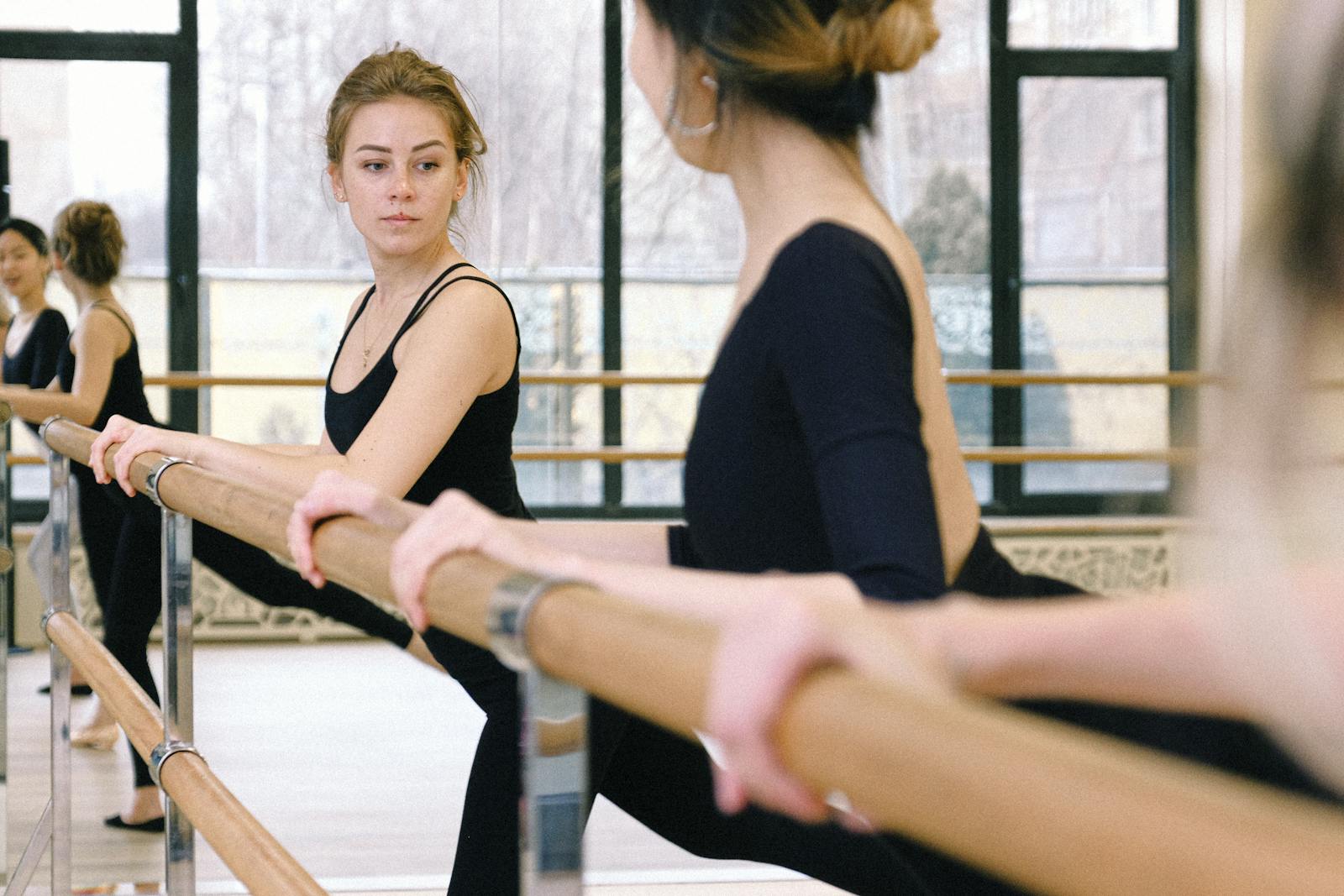
Group size matters more at fifty-plus than at any other age. Six to eight at the barre gives the teacher enough time to teach within each individual's available range; fifteen does not. ARTIS classes cap at eight.
The fifty-plus beginner room
ARTIS Vienna runs small-group Vaganova classes — maximum eight at the barre — designed to teach within available range. The first class is a single class, booked on its own in the app; the membership can wait until you know you want one, and that first class is then credited towards its first month.
What to skip
Large open intermediate classes you will be lost in. A first-time fifty-plus beginner placed in a room of twenty intermediates spends the hour confused, not learning, and walks out convinced ballet is closed to her. It is not — the room was.
The "no pain no gain" instructor. The line is contested even in the vocational track. After fifty it is straightforwardly counterproductive: pain is the signal that load has outrun tissue capacity, and the recovery cost is paid in days, not minutes. A teacher who responds to "this hurts" with "push through" is the wrong teacher.
Studios that push pointe at recreational adults. Pointe work is a legitimate question for adults who have built three to four years of consistent technique and want it; it is not a beginner promise. Anyone offering pointe to a first-year recreational fifty-plus student is selling, not teaching.
Competition-track environments. Graded examinations and showcases belong to the vocational pipeline. A studio that funnels every adult toward them has misunderstood the room it is serving.
How to spot a fifty-plus-friendly studio, in three signals: published group size of eight or fewer at the barre; a beginner class that runs from the absolute beginning every term; a teacher who, when asked, can describe how she modifies plié depth, turnout, or grand battement height for an older hip — specifically, not abstractly.
The first six months
Week one is awkward. The vocabulary is in French, the geometry of the body is unfamiliar, the mirror is uncomfortable. This is the universal first-class report and it passes.
Weeks one to four: vocabulary. Plié, tendu, dégagé, rond de jambe, the five positions of the feet, the rough geometry of port de bras. Most of the work is at the barre; loads are small.
Months one to three: alignment shifts. The pelvis sits differently; the ribcage stops drifting forward; the shoulders unhook from the ears. People outside the studio start noticing the carriage before the student does.
Months three to six: recognisable lines forming. The arabesque is not yet beautiful, but it is identifiably an arabesque. Centre work becomes possible without losing balance every other count. The fifty-plus body has, by this point, demonstrated to itself that it learns. That demonstration is the actual gain.