GUIDE · BEGINNERS
What to Wear to Your First Ballet Class
What works for the first weeks — and what to skip until you know you want to continue.
Alexandra·6 min read·MAY 2026
Walking into a ballet studio for the first time can feel exposing. The mirrors, the barre, the silence before class — every visual cue says this room takes itself seriously. The good news: nobody is looking at you, and the dress code is much more permissive than the imagery suggests. For a first class, comfort beats convention. Leotards and tights are not required. They are the studio's default uniform for ongoing students, but they are not the admission ticket.
Why fitted, not loose
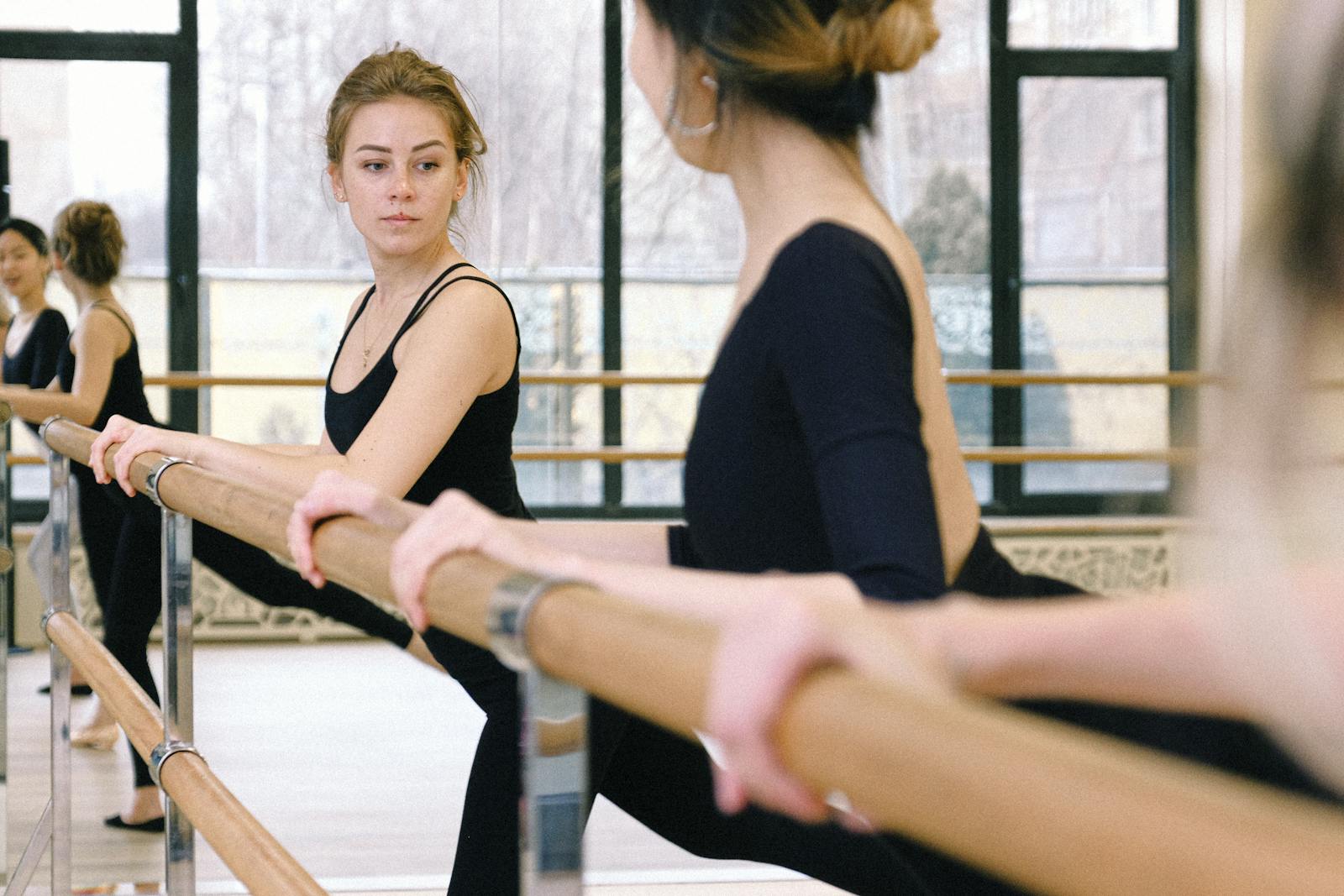
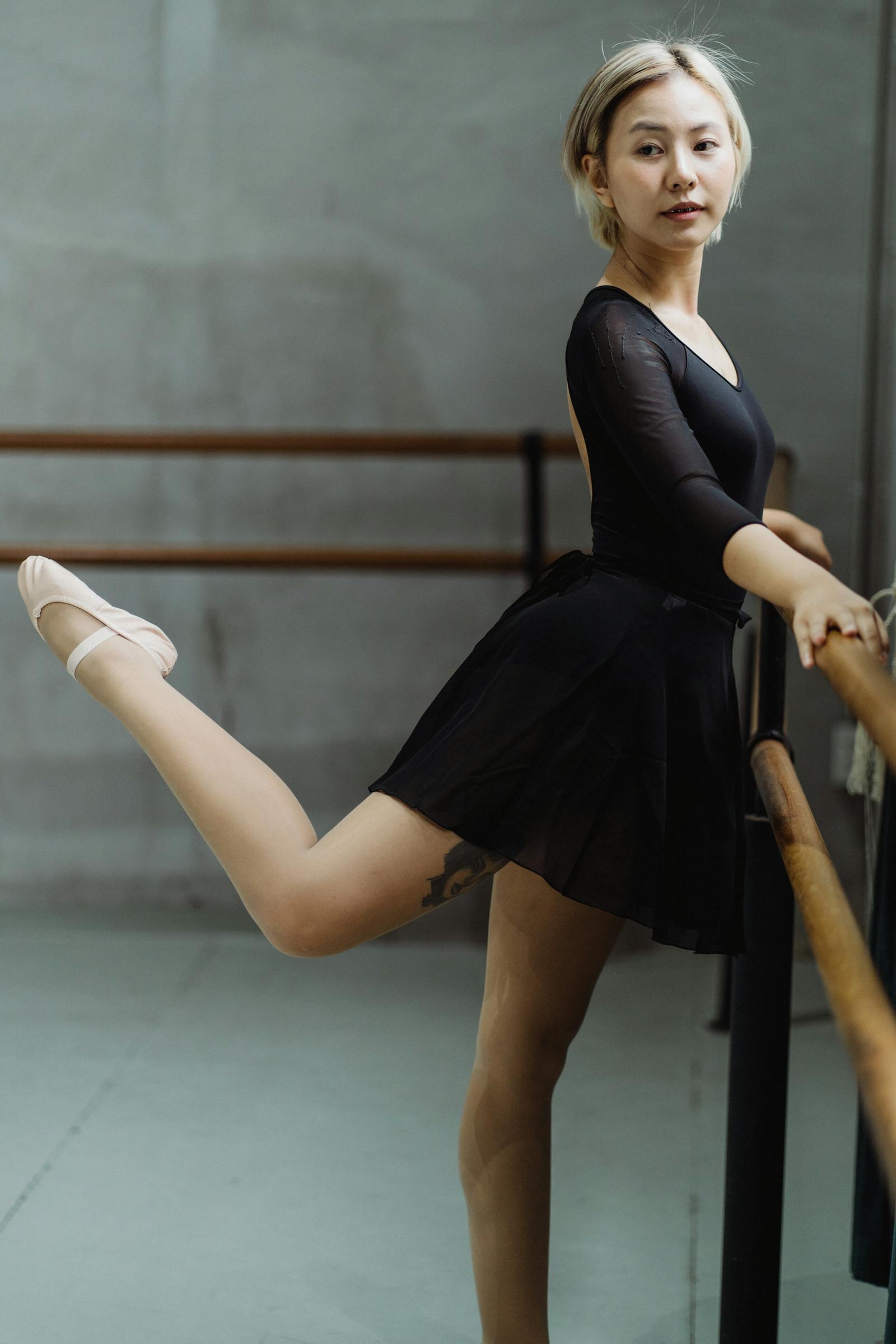
The studio expects you to be able to see your own line in the mirror. Loose clothing hides that line — both from you and from the teacher, who needs to read your posture to correct it. Fitted does not mean uncomfortable. It means the fabric follows your body instead of pooling around it.
For your top, a fitted t-shirt or a tank top. Cotton-blend stretches well and breathes; pure cotton can cling once you start sweating. Avoid hoodies and oversized sweatshirts — you will be raising your arms constantly and the extra fabric drags.
For your legs, leggings, capri leggings, or stretch shorts. Sweatpants are too heavy and obscure foot placement. Jeans are not workable for any studio class.
Shoes — what you need and what you do not
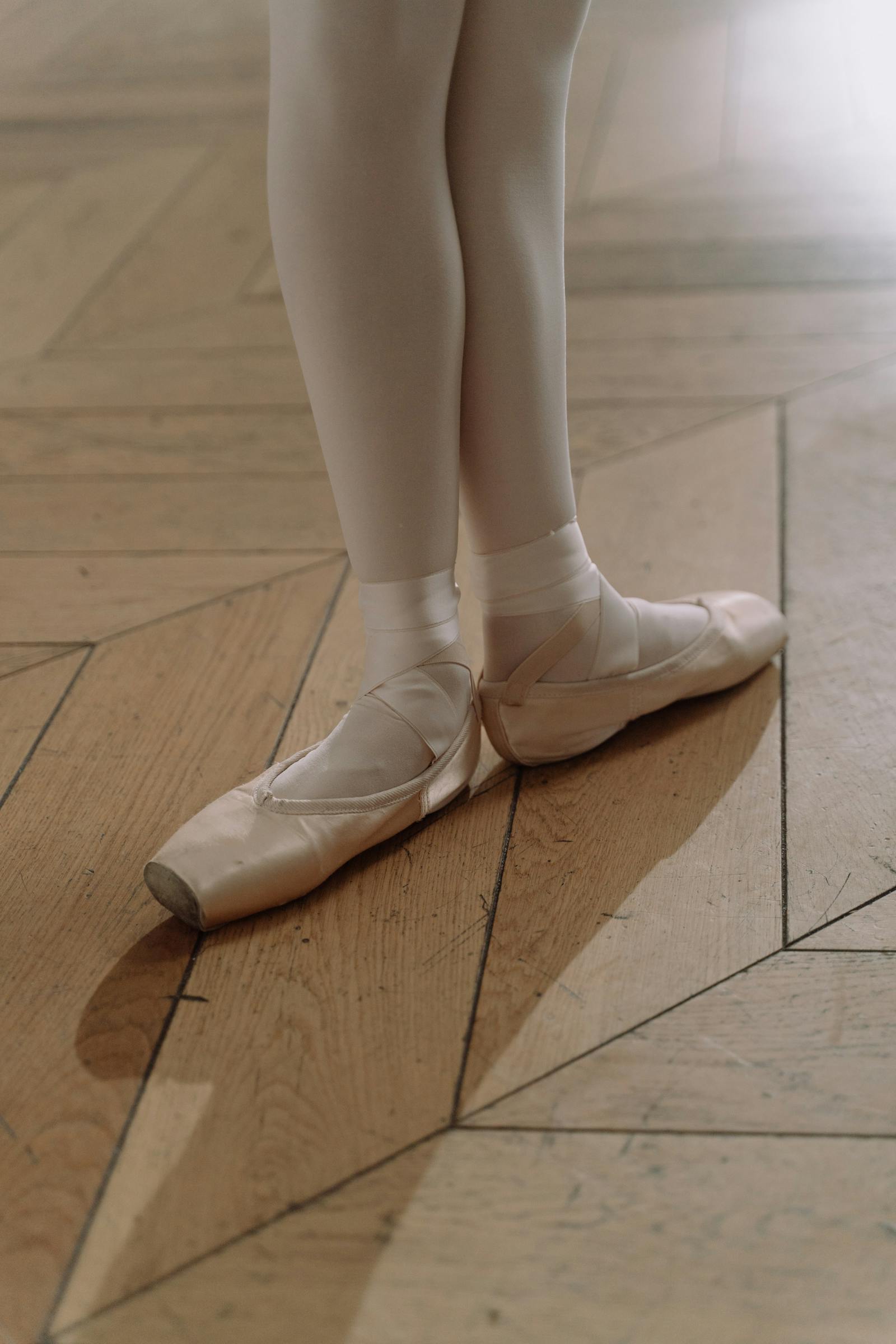
For the first three or four classes, socks are fine — preferably ones with rubber grip on the sole. The grip lets you turn safely on a polished studio floor without slipping. If you decide to continue, soft canvas ballet slippers become the standard somewhere around the fourth week. They cost roughly fifteen to twenty euros and last most beginners a full year.
In Vienna three specialist shops fit dance shoes properly — Wilhelm Schachtner in the eighteenth district, House of Dancing in the seventeenth, and Jump In on Neubaugasse in the seventh. A first fitting takes about ten minutes and is worth doing in person; sizing varies enough between brands that ordering blind is a gamble.
Pointe shoes are years away and not something you buy on your own. They sit at the end of a multi-year preparation and require an instructor's assessment before the first pair. A studio that mentions pointe to a beginner in week one is selling, not teaching.
Hair, jewellery, and the small things
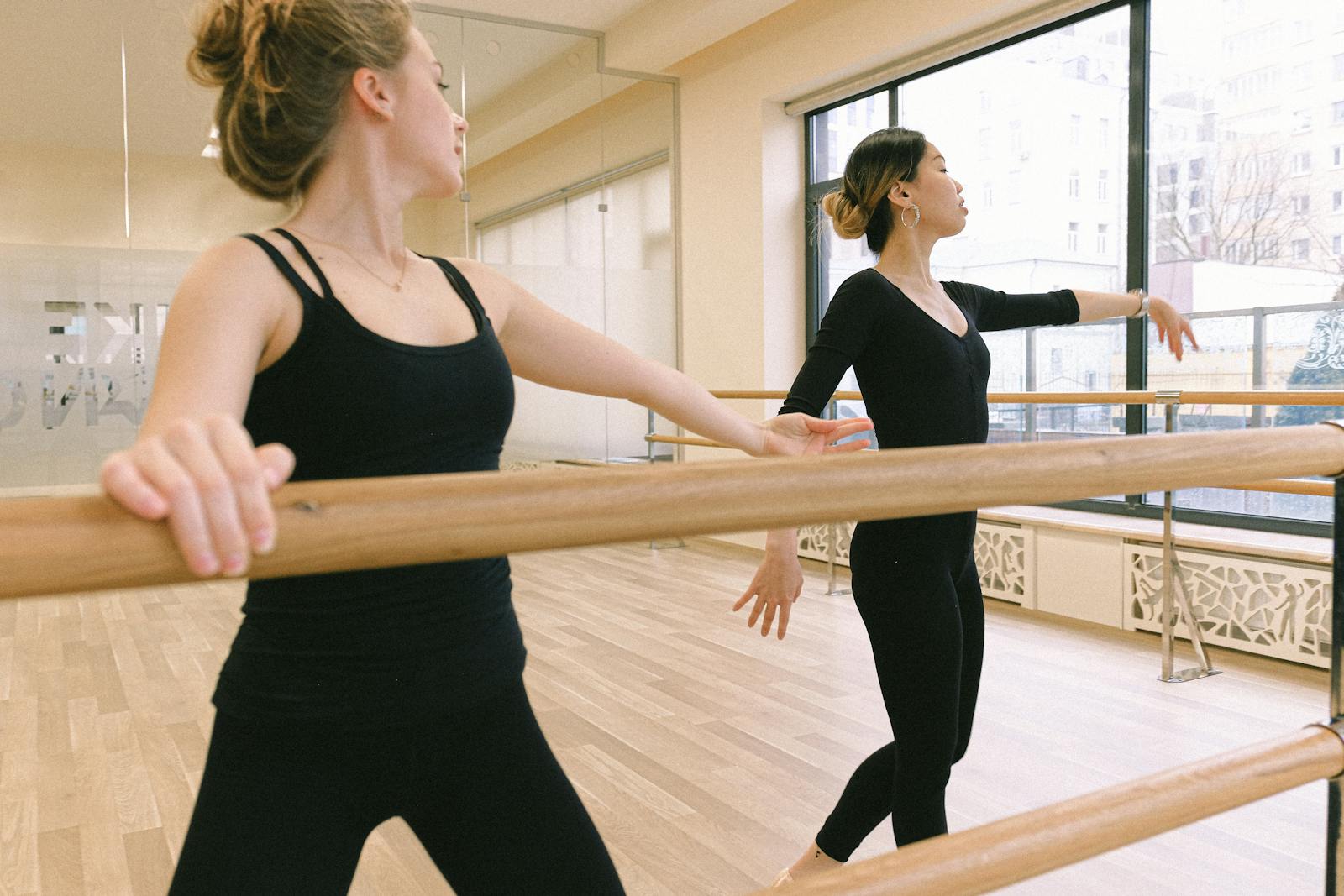
Hair pulled back from the face — a low bun, a tight ponytail, a clip if your hair is short. The reason is not aesthetic. Ballet places the head as the final extension of the spine, and épaulement work involves precise rotation of the neck. Hair across the face gets in the way of both.
No rings, no watches, no long necklaces or dangling earrings. Stud earrings are fine; anything that swings or could catch on fabric is not. The studio is a quiet environment — a bracelet against a wooden barre is louder than it sounds at home.
A small bottle of water near the wall. Studio class is intermittent rather than aerobic, so you will not be drinking through it — but a sip between the barre and centre work is normal and welcome.
The first class fits more bodies than the imagery suggests
Open classes at ARTIS Vienna run six days a week. Come in what you already own; bring everything else on the second visit if you decide to.
Arriving and the first minutes
Arrive ten minutes early. The time is enough to change without rushing, find the studio, see where to put your things, and breathe before the room fills. Walking in two minutes before class starts is the single most common reason beginners feel overwhelmed.
Tell the teacher you are new. One sentence — "this is my first ballet class" — is enough. Every honest studio adjusts pacing on that signal. Standing on the side and watching is acceptable for the first five minutes if a step is unfamiliar; you will not be made to do something before you understand it.
The first class is not a recital. It is a workshop. The room expects you to learn, not to perform — and the only way to do that is to be in it long enough for the strangeness to fade.